Car
Planning to Buy a Car during festive period? Here’s a checklist

CarPhD





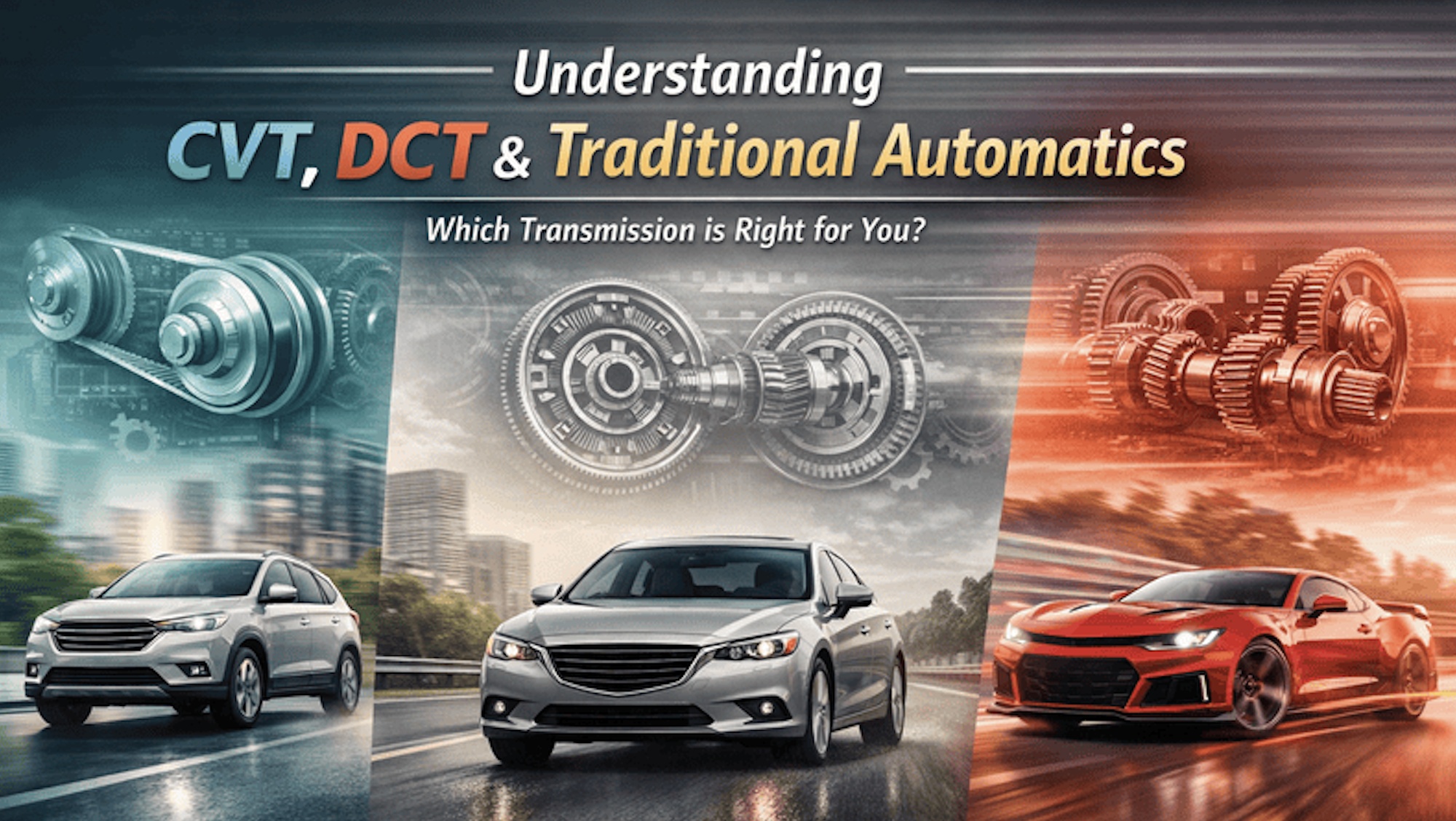
Understanding CVT, DCT, and Traditional Automatics: Which Transmission is Right for You?
In today’s automotive landscape, choosing between a manual and an automatic gearbox is no longer the only decision buyers face. Modern vehicles now offer multiple types of automatic transmissions—primarily CVT (Continuously Variable Transmission), DCT (Dual-Clutch Transmission), and Traditional Automatic (Torque Converter)—each engineered with a unique philosophy.
Understanding how these systems work—and more importantly, how they feel on the road—can help you make a smarter buying decision.
What is a Traditional Automatic (Torque Converter)?
The traditional automatic transmission, often called a torque converter automatic, is the oldest and most widely used system.
How it works:
Key Characteristics:
Pros:
Cons:
? Modern torque converters have significantly improved efficiency and reduced power loss compared to earlier versions .
Get the best deals on cars. Click here!What is a CVT (Continuously Variable Transmission)?
A CVT is fundamentally different—it doesn’t have fixed gears at all.
How it works:
Key Characteristics:
Pros:
Cons:
? In simple terms: CVT is about comfort + mileage, not performance.
What is a DCT (Dual-Clutch Transmission)?
A DCT is essentially two gearboxes working together.
How it works:
Key Characteristics:
Pros:
Cons:
? DCT is widely used in performance and premium cars.
CVT vs DCT vs Traditional Automatic: Quick Comparison

Which One Should You Choose?
Your choice should depend on driving habits, not just specs.
Choose CVT if:
Choose DCT if:
Choose Traditional Automatic if:
? There is no single “best” transmission—each serves a different purpose depending on the driver’s needs .
Check out the Best Deals from Authorised WorkshopsCarPhD’s Final Words
Choosing the right transmission isn’t about picking the “most advanced” option—it’s about selecting what aligns best with your driving reality.
If your daily routine involves navigating congested city roads, a CVT’s smoothness and efficiency will make every drive less stressful. If you’re someone who enjoys responsive acceleration and a more connected driving feel, a DCT will keep you engaged behind the wheel. And if you prefer a dependable, well-balanced experience that works effortlessly in all conditions, the traditional torque converter automatic remains a solid choice.
At the end of the day, the best transmission is the one that complements your lifestyle—not complicates it.